Brown County marriage and divorce records are official documents that record legal unions and their dissolutions in the county. These vital records provide essential details such as names, dates, and locations, helping verify marital status or support legal and genealogical needs. Individuals and professionals rely on these documents for accurate, county-issued proof. These records are often requested for legal matters, insurance, or financial verification, making them an important resource for residents and organizations alike. They also help maintain accurate public records and support transparency within the community.
Marriage records include certificates issued after weddings, while divorce records document court-approved dissolutions. Both types are maintained by Brown County authorities and the Brown County Court, ensuring proper legal oversight and official validation. These records are used for legal filings, family history research, and identity verification. Copies can be requested online or in person, providing residents with convenient access to official information. These documents often include additional details such as officiant names, court case numbers, and filing dates, which can be critical for legal or historical purposes. Maintaining accurate records through the Brown County Court helps residents confirm important life events efficiently and reliably.
What Are Brown County Marriage Records?
Brown County marriage records are official documents that record the legal union of two individuals. They provide proof of marital status and contain key information about the marriage, including the date, location, and names of the spouses.
Marriage records serve as vital records maintained by the Brown County government. These records are an official account of marriages performed in the county and are part of the public record. In Wisconsin, marriage records have been documented statewide since 1907, making them a valuable source for both historical and legal purposes.
What’s Included in a Marriage Record
A typical Brown County marriage record contains:
- Full names of both spouses
- Date of the wedding
- Location or venue of the marriage
- Officiant or witness information
- Marriage license or certificate number
These details establish the marriage legally and are often used as official documentation for matters like name changes, insurance, or proof of relationship.
Marriage Certificate vs. Marriage License
It is important to distinguish between a marriage license and a marriage certificate:
| Document | Purpose | When Issued |
|---|---|---|
| Marriage License | Legal permission to marry | Before the wedding |
| Marriage Certificate | Official proof that the marriage occurred | After the wedding ceremony |
What Are Brown County Divorce Records?
Brown County divorce records are official documents that detail the legal end of a marriage within the county. These records include both divorce filings and the final divorce judgments issued by the court. Divorce records in Brown County are part of family law records maintained by the county clerk and court system. They provide essential information about the dissolution of marriage, including the parties involved, the date of divorce, and the court’s decisions regarding property, custody, or support. These records can help verify marital status or serve as legal proof in related matters.
Divorce Certificates vs. Full Divorce Case Files
It is important to distinguish between a divorce certificate and a full divorce case file:
- Divorce Certificate: A brief, official document confirming that a marriage has legally ended. It typically includes names of the spouses, the date of divorce, and the court that issued the judgment.
- Full Divorce Case File: A complete record of the divorce proceedings. This includes petitions, motions, court orders, custody agreements, financial settlements, and any other related documents. These files are more detailed and may contain sensitive information.
Where Brown County Divorce Records Are Held
Brown County divorce records are maintained by the Brown County Clerk of Courts. Depending on the type of record:
- Certificates are often accessible for verification or copies through the clerk’s office.
- Full case files may require a formal request to view, especially if sensitive details like minor child information are involved.
Public vs. Sealed Information
Most basic case information is considered public, such as:
- Names of the parties
- Date of filing
- Case number
- Final divorce judgment
Certain details may be sealed for privacy reasons. These can include:
- Social Security numbers
- Financial account details
- Custody and adoption records
This distinction ensures that the public can access essential legal dissolution information while protecting private or sensitive data.
How to Obtain Marriage Records
Obtaining a Brown County marriage record is straightforward and can be done online, by mail, or in person. A certified copy of the marriage certificate serves as the official proof of marriage for legal or personal purposes.
Online Options for Marriage Certificates
Residents can request Brown County marriage records quickly through online services. VitalChek is a widely used option, providing secure and reliable delivery of certified copies. To order online:
- Visit the https://www.vitalchek.com/v/marriage-certificate website and select Marriage Records.
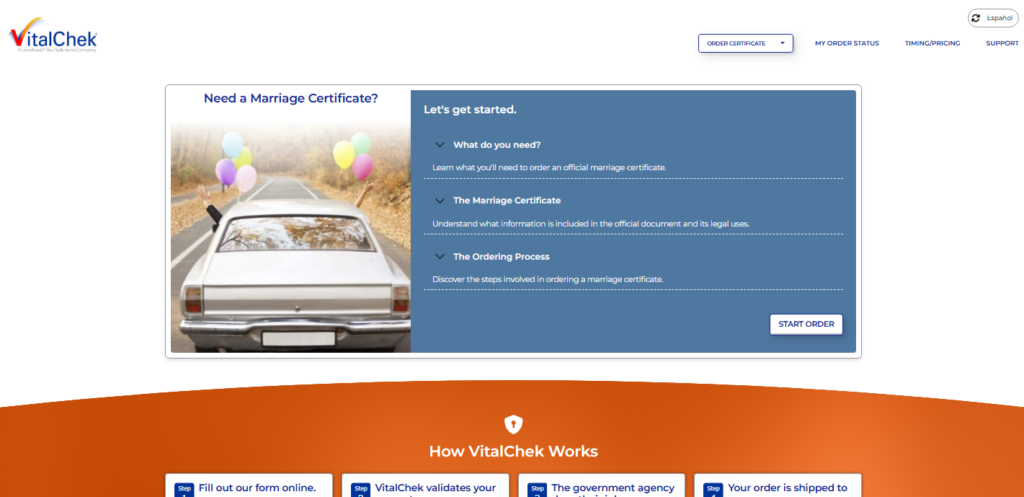
- Enter the names of the couple, date of marriage, and county (Brown County).
- Provide a valid form of identification and payment for the processing fee.
- Choose standard or expedited delivery based on urgency.
Many official county portals also allow digital requests, but fees and processing times may vary. Online requests typically take 7–14 business days for standard processing, while expedited options may arrive in 3–5 business days.
Tips for online requests:
- Double-check spelling of names and date of marriage to avoid delays.
- Ensure the mailing address is accurate for delivery.
- Keep a copy of your receipt for tracking purposes.
In-Person Requests at Brown County Register of Deeds
For those who prefer handling records directly, the Brown County Register of Deeds offers in-person services. Visiting the office allows immediate verification and faster access to certified copies.
Requirements for in-person requests:
- A valid photo ID (driver’s license, passport, or state ID).
- Completed request form (available at the office or online).
- Payment of applicable fees (cash, check, or card).
Office Information:
Brown County, WI Register of Deeds
305 E Walnut St #260, Green Bay, WI 54301
Phone: (920) 448‑4470
Office Hours:
- Monday–Thursday: 7:30 a.m.–5:00 p.m.
- Friday: 7:30 a.m.–11:30 a.m.
Vital records, including marriage certificates, are issued: - Monday–Thursday: 7:30 a.m.–4:30 p.m.
- Friday: 7:30 a.m.–11:00 a.m.
In-person requests often take same-day processing if all documents are in order, making this option ideal for urgent needs.
Mail Request Process
Brown County also accepts marriage record requests by mail, offering a convenient option for out-of-state residents. The process involves:
- Download or print the official request form from the county website.
- Filling in all required details, including the couple’s names, date of marriage, and applicant information.
- Attach a notarized copy of your ID for identity verification.
- Including payment via check or money order.
- Mailing the request to the Register of Deeds office.
Mail requests usually take 2–4 weeks, depending on the postal service and office workload.
Fees and Processing Times
| Request Method | Fee | Standard Processing | Expedited Option |
|---|---|---|---|
| Online (VitalChek) | $25–$30 + shipping | 7–14 days | 3–5 days |
| In-Person | $15–$20 per copy | Same day | N/A |
| $15–$20 per copy | 2–4 weeks | N/A |
How to Obtain Divorce Records
Requesting Brown County divorce records is done through the Clerk of Circuit Court. For certified certificates or full court case files, a formal request—either in person or by mail—is usually required, since online searches only provide limited information.
Certified Divorce Certificates
Certified divorce certificates are official documents issued by the Brown County Clerk of Circuit Court that confirm the legal end of a marriage. They typically include the names of both parties, the divorce date, the case number, and the judge’s signature. These certificates are often needed for purposes like name changes, remarriage, or legal verification.
To request a certified certificate:
- Visit the: https://www.vitalchek.com/v/divorce-records
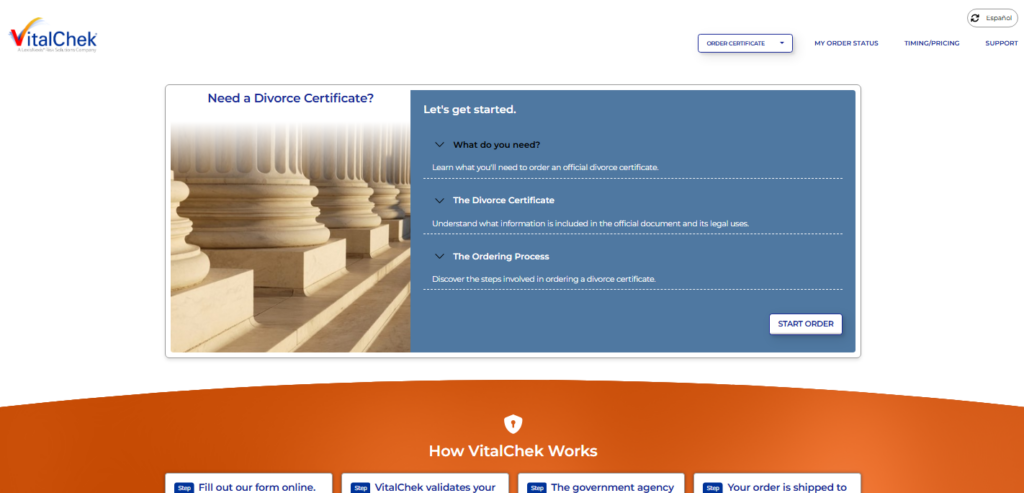
To request a certified certificate, an individual must complete a request form, provide a valid photo ID, and pay a small fee—usually between $10 and $15 per copy. If requesting on behalf of someone else, a notarized authorization may also be required. Certified certificates are considered the legal proof of divorce and are widely accepted by government agencies, banks, and other institutions.
Full Divorce Case Files
For those seeking more detailed information, full divorce case files can be requested directly from the Clerk’s office. These files include petitions, responses, settlement agreements, and records of custody or financial arrangements. Accessing the full case file is particularly useful for attorneys, researchers, or individuals needing documentation for legal proceedings.
Requesting full case files usually requires visiting the Clerk of Circuit Court in person, providing the case number or the parties’ full names, and completing a records request form. Fees vary depending on the number of pages, often ranging from $0.25 to $1 per page. Certain documents may be redacted to protect privacy, in accordance with public access laws.
Online Search Limitations
While the Brown County court system provides some information online, such as case numbers, party names, and filing dates, complete records and certified copies are not available digitally. Online access is primarily for reference and cannot replace an official certificate or the full case file. This helps maintain the privacy of sensitive personal information while still allowing basic public searches.
Fees and Identity Requirements
Requesters must present a government-issued photo ID. For mailed requests, a notarized copy of the ID is often required. Fees differ depending on the type of document requested. Certified divorce certificates are typically $10–$15 per copy, while full case file copies are charged per page. Additional fees may apply for older records or special services.
Special Note on Older Records (Pre‑2016)
Divorce records filed before 2016 may be archived and require additional processing. Retrieval of these records can take longer, and extra verification of identity may be needed. It is recommended to contact the Clerk’s office beforehand to confirm availability, fees, and any special requirements.
Marriage Licenses vs. Marriage Certificates
A marriage license and a marriage certificate are related but serve different purposes. The license grants legal permission to marry, while the certificate officially documents that the marriage has occurred.
What Each Is Used For
A marriage license is obtained before the wedding. It is a legal permit issued by the county clerk’s office that allows two people to marry. Without it, a marriage cannot be legally recognized. The marriage certificate, on the other hand, is issued after the ceremony and serves as a permanent vital record proving that the marriage took place.
- Marriage License: Legal permission to wed
- Marriage Certificate: Proof of marriage for records, legal matters, or name changes
When and Where to Apply
Couples must apply for a marriage license at the Brown County Clerk’s office or through their official online portal if available.
Requirements often include:
- Valid photo IDs
- Proof of age
- Application fees
Once the marriage is performed, the officiant (minister, judge, or other legally recognized person) signs the license and submits it to the county. The county then issues a marriage certificate.
Validity and Record Retrieval
A marriage license is usually valid for a limited period (often 30–90 days). If the wedding does not occur within this window, a new license must be obtained. The marriage certificate has no expiration and is the official document used for:
- Legal name changes
- Updating social security or driver’s license records
- Obtaining spousal benefits
Having the certificate makes it possible to retrieve official marriage records from Brown County for personal or legal purposes.
Key Differences at a Glance:
| Feature | Marriage License | Marriage Certificate |
|---|---|---|
| Purpose | Permission to marry | Proof of marriage |
| When | Before wedding | After wedding |
| Validity | Limited (30–90 days) | Permanent |
| Used for | Legal wedding eligibility | Legal documents, benefits |
| Requires | Application & fees | Officiant submission |
Locations & Contact
Brown County marriage and divorce records are available at official county offices. Certified marriage certificates can be obtained from the Register of Deeds, while divorce filings are handled by the Clerk of Circuit Court.
Residents can request records in person, by mail, or online, depending on the type of document needed. Visiting the official offices ensures that all certificates and filings are authentic and legally recognized. Both marriage and divorce records are maintained by dedicated county offices that provide certified copies for personal, legal, or official purposes.
Marriage Records
The Brown County Register of Deeds manages all marriage records, including certified marriage certificates. The office is located at:
Address: 123 Main Street, Green Bay, WI 54301
Office Hours: Monday–Friday, 8:30 AM – 4:30 PM
Phone: (920) 555-1234
Email: deeds@browncountywi.gov
Residents can request a certified copy of a marriage certificate in person, by mail, or online.
For walk-in requests, visitors should bring:
- A valid government-issued ID
- Completed request forms (available at the office or online)
- Applicable fees (typically $10–$15 per certificate)
The office provides vital records services and public access to historical marriage records. Certified copies are required for legal matters such as name changes, passport applications, or insurance purposes.
Divorce Records
The Clerk of Circuit Court handles all divorce filings and maintains divorce case records. The office is located at:
Address: 100 North Jefferson Street, Green Bay, WI 54301
Office Hours: Monday–Friday, 8:00 AM – 4:30 PM
Phone: (920) 555-5678
Email: clerk@browncountywi.gov
Divorce records can be requested in person, by mail, or through the court’s online services (for certified certificates only). Visitors requesting certified divorce certificates should bring:
- Valid photo ID
- Completed request forms
- Payment for fees (usually $20 per certificate)
For access to full case files, additional steps are required, and certain documents may only be available for in-office review. The Clerk’s office ensures family law records are maintained securely and are available for legal, personal, or genealogical purposes.
FAQs — About Marriage & Divorce Records
Finding accurate answers about Brown County marriage and divorce records helps residents and researchers save time and avoid confusion. The following FAQs address common concerns with clear, concise explanations.
How long until I get my certified marriage certificate?
Certified marriage certificates in Brown County are typically processed within 5–10 business days after a request is submitted, though expedited requests may shorten this period depending on the submission method. Processing times can vary based on whether the request is made online, by mail, or in person, with in-person requests often providing same-day issuance. Requesters should ensure all required details, such as full names, dates, and payment, are accurate to avoid delays, and online requests may take slightly longer due to verification and mailing procedures.
Can I get someone else’s divorce records?
Divorce records in Brown County are generally public, but access depends on the document type and privacy restrictions. While court-issued divorce decrees are usually accessible, some records containing sensitive information, especially those involving minor children, may be limited or require proof of legitimate interest. Certified copies may need identification and authorization, and online databases often display less information than in-person courthouse requests. This balance protects personal privacy while allowing legal and historical documentation to remain available.
What if my marriage happened before 1907?
Marriages occurring before 1907 may not appear in Brown County’s current digital database, as older records are often kept in archived ledgers or at the state level. Individuals seeking these records can visit the Brown County Register of Deeds office to consult archived marriage books or request copies by mail, providing as much information as possible, including names, approximate dates, and locations. Historical societies and state archives may also hold additional records, and locating older documents may require extra time for verification, but they remain accessible with proper details.
Can records be corrected or amended?
Brown County marriage and divorce records can be corrected or amended if errors are identified, including misspelled names, incorrect dates, or other inaccuracies. Requests for correction require submitting a written application to the Register of Deeds along with supporting documentation, such as identification and legal proof of the correct information. Fees may apply for processing amendments, and all corrections are carefully verified to ensure the accuracy and integrity of public records while maintaining official documentation standards.
What if the divorce record is sealed?
When a divorce record is sealed by the court, it is restricted from public access and can only be obtained by the parties involved or through a court order permitting release. Sealed records often protect sensitive information, particularly in cases involving minors or confidential legal matters. Requests for sealed records must go directly through the court that issued the decree, and unauthorized attempts to access them can have legal consequences. Standard public requests for non-sealed records are handled through the Brown County Register of Deeds using the usual process for certified copies.